The Namurana Letters

The Namurana Letters

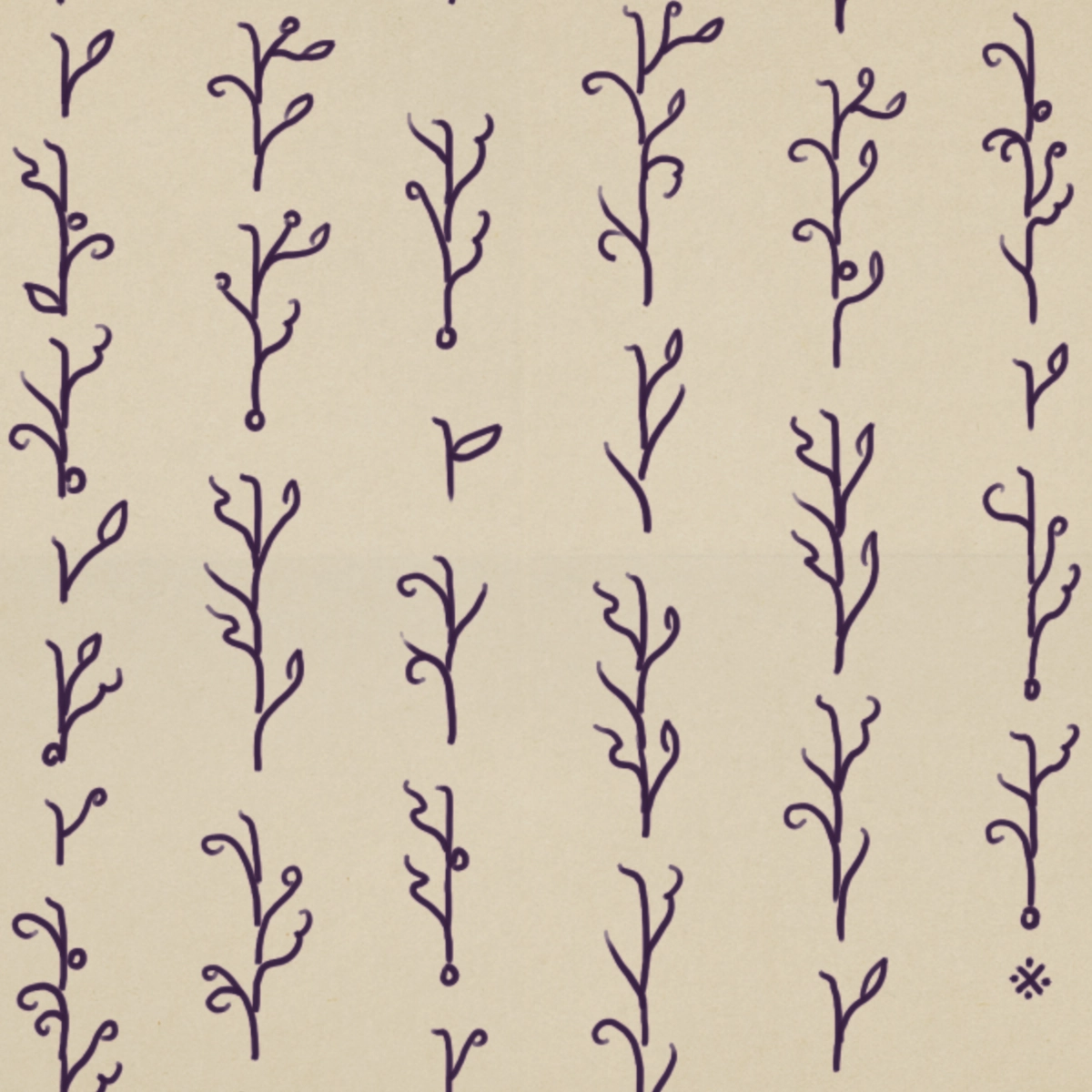
The Namurana Letters are a simple cipher system in which each symbol represents either a consonant or digraph, or a vowel. Words are arranged vertically in a linear fashion, forming elegant columns of text. I originally developed the script for use in illustrations and graphic elements associated with Tiriana, my original fantasy roleplaying setting.

Client
Personal project
Data
July 2020
Type
Alphabet

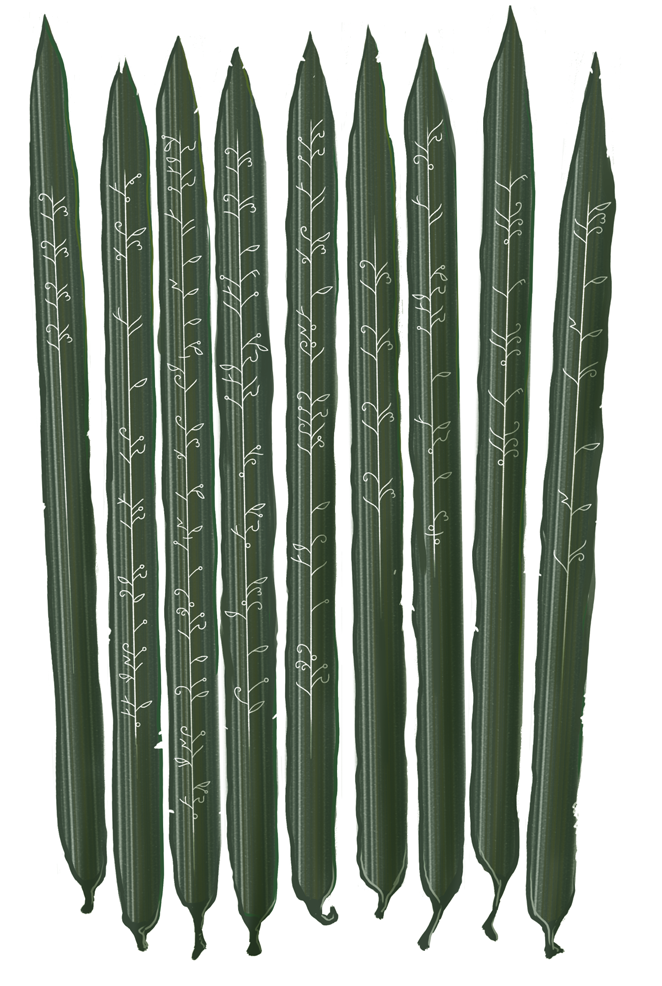
Because Tiriana draws much of its inspiration from Indigenous Brazilian cultures—which traditionally emphasize rich graphic traditions rather than written language—the script was conceived to evoke the verticality of trees while remaining highly ornamental. Within the world’s fiction, traditional texts are inscribed on buriti palm leaves, requiring a writing system that is both delicate and visually refined.
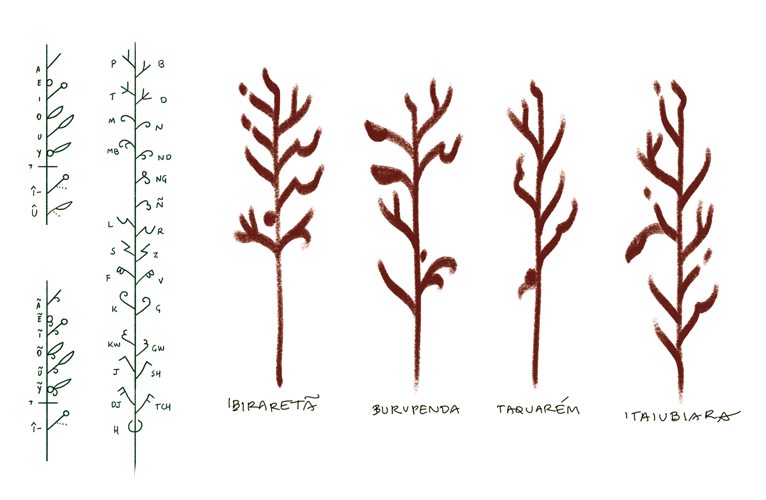
The namurana letters are among the most widespread writing systems in Tiriana and exists in numerous regional variants. In some areas, texts are written from bottom to top; in others, the glyphs adopt a more angular appearance. Certain traditions separate the central stem with each word, while others do so only between sentences, reflecting the cultural diversity of the setting.

The examples presented below are adaptations of stories collected in Poranduba Amazonense, recorded by Brazilian naturalist João Barbosa Rodrigues in 1890. Both tales were later adapted by composer Heitor Villa-Lobos in his Two Amerindian Legends in Nheengatu: I. Yurupari and the Boy and II. Yurupari and the Hunter.
The Yurupari and the Boy
Nheengatu

[Manha! Manha! Manha! Manha!]

English

[Mom! Mom! Mom! Mom!]

Yepé kunhã, paá, u kire taíra irumo i kisaûa pupé.

A woman, it is said, was sleeping with her son in her hammock.

Yurupari, paá, u su u îu’uca kunhã iuá su’i i membira u imu kisaûa uirpe.

Yurupari took the boy from her arms and laid him on the ground.

— Manha! Manha! U xipiá Yurupari yané uirpe unhenu u ikó…!

— Mom! Mom! Look, Yurupari is lying beneath us…!

Ariri, paá, kunhã u peseka muirakanga u nupa i membira.

Then the woman picked up a stick and struck her son.

[Manha! Manha! Manha! Manha!]

[Mom! Mom! Mom! Mom!]

Arame, paá, Yurupari u pure u nhe’e:

Then Yurupari leapt up, saying:

— Xa ganane! Xa ganane! Xa ganane!

— I tricked you! I tricked you! I tricked you!

Unhana, u su ana. U su ana.

He ran away. He went away.
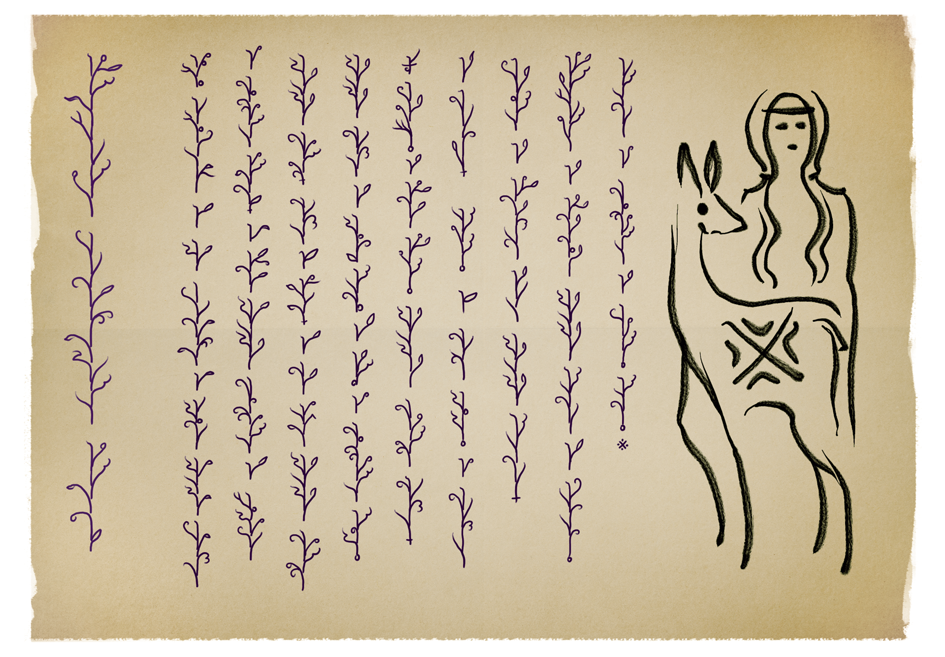
Yurupari and the Hunter
Nheengatu

Yepé apegaua u su kamundu u asema suasu kunhã i membira irumo. U îumu suasu membira, u pesika suasu mirĩ. Manha o îauau. U mu iaxu suasu mirĩ, suasu manha u seno rame u ure i membira rese. A’e kuite u îumu îuire suasu mirĩ manha. U manu. Ariré o maã sese i manha kuéra u iumunhã uaá suasu rama. Yurupari u îumumeu suasu rama u ganane arama i membira u kire rame.

English

A hunter once went into the forest and encountered a doe with her fawn. He shot the fawn and carried it away. The mother fled. When the young deer cried, its mother returned. The hunter then shot the doe as well. She died. As he approached, the man realized that he had killed his own mother. Yurupari had transformed the hunter’s mother into a doe in order to deceive her son while he slept.

The Namurana Letters themselves were originally inspired by Laoris, a writing system created by Anton Brejestovski for the constructed language of the same name. The language was developed for the musical group Caprice and appears in songs from the album Elvenmusic 3 — Tales of the Uninvited.
The Ismaline Epigraphy

The Ismaline Epigraphy

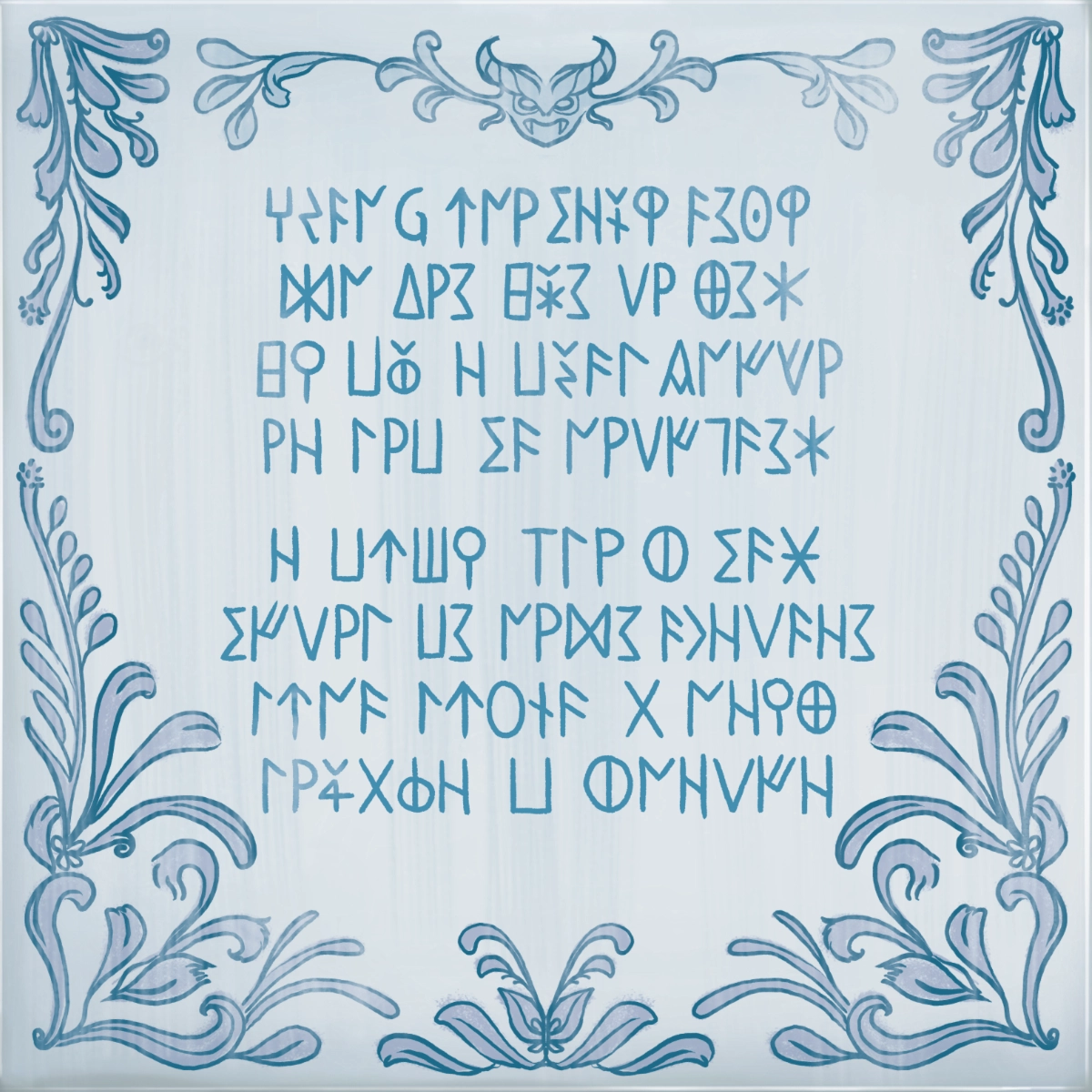
The Ismaline Epigraphy is a writing system inspired by the scripts used by the Paleo-Hispanic peoples of the Iberian Peninsula prior to the widespread adoption of the Latin alphabet. It was developed for illustrations and graphic elements associated with Tiriana, my original fantasy roleplaying setting. Because part of Tiriana’s cultural background draws inspiration from Iberian traditions, this particular script reflects those influences.

Cliente
Personal project
Date
June 2020
Type
Semi-sillabary


Within the setting, the system is commonly known as Ismaline, after its mythical creator, Ismália. It is also referred to as the Auretanian script, owing to its origins in Auretânia, a distant land beyond the sea. When the Auretanians arrived in Tiriana, they split into two great migrations, and this division eventually transformed both the appearance and the use of the writing system, altering the forms and functions of several characters.

As an irregular script, many symbols are interpreted differently depending on context. It is common, for instance, for the sign BA to represent simply B, or for J to stand for JA.

Auretânia, Suçuaranas, Brácara and Mitancariri, using ismaline.

The Castanhos, who inhabit continental Tiriana, frequently employ the script in woodcuts and chapbooks. Due to centuries of close interaction with neighboring peoples, their forms of many letters have become considerably more irregular and diverse.

Português

Já no largo Oceano navegavam,
As inquietas ondas apartando;

English

Already they sailed upon the vast Ocean,
Parting the restless waves.

Os ventos brandamente respiravam
Das naus às velas côncavas inchando;

The winds breathed gently,
Swelling the ships’ hollow sails.

Da branca escuma os mares se mostravam
Cobertos onde as proas vão cortando

The seas appeared covered in white foam
Wherever the prows cut through them.

Assim fomos abrindo o chão dos mares,
Que geração alguma não abriu,

Thus we opened the floor of the seas,
Untrodden by any generation before.

As novas ilhas vendo e os novos ares

Beholding new islands and new airs.

Com os olhos no Oriente
Pelo novo astrolábio

With our eyes turned to the East,
Guided by the new astrolabe.

Mawaca — Largo Oceano (Vast Ocean) (adapted from Os Lusíadas)

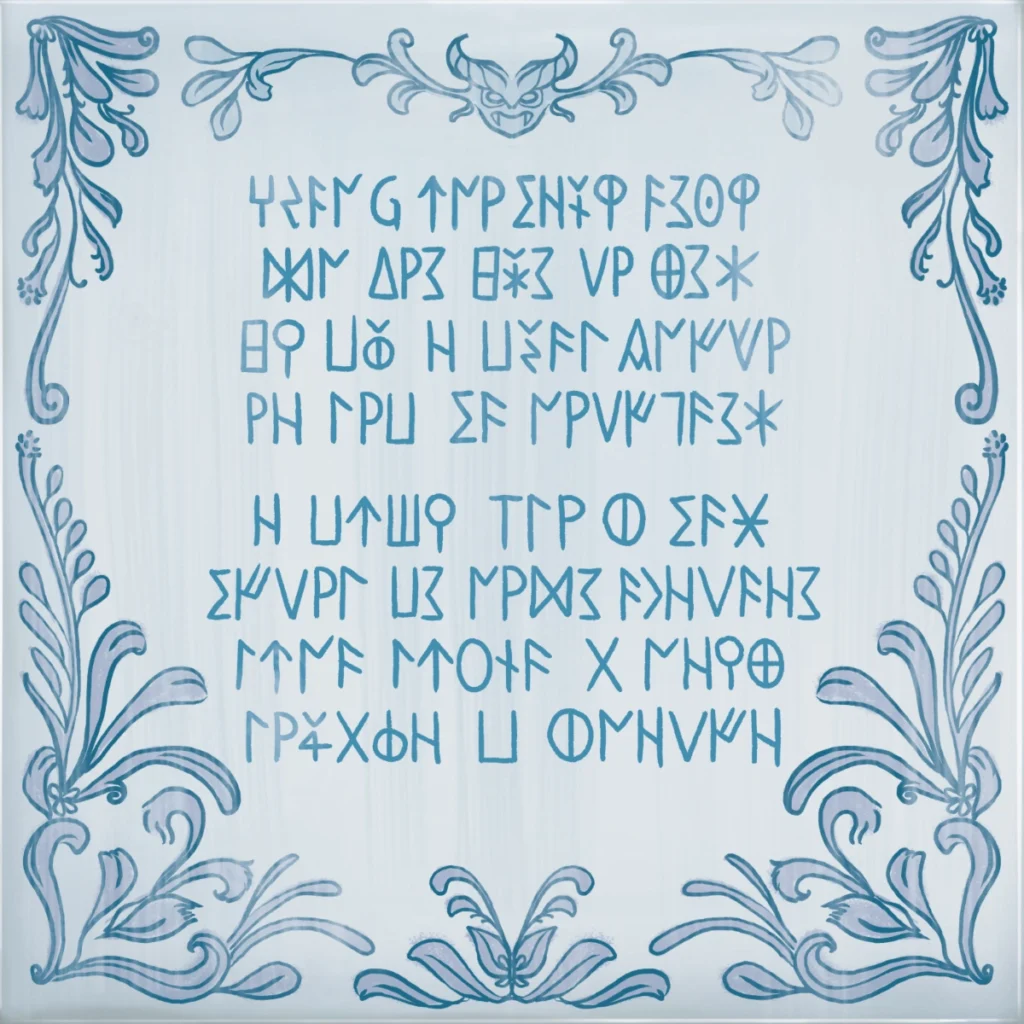
In the archipelago of Ebra, in western Tiriana, the descendants of Auretania strive to preserve the legacy of their ancestral homeland, introducing only minor variations in the style and use of the script. There, Ismaline writing is commonly found on ceramic tiles and other forms of public ornamentation.

Português

Dizem que uma sombra escura
Com duas pontas na testa

English

They say that a dark shadow,
Bearing two horns upon his brow,

Por donde o Donzel caminha
Ao lado se manifesta.

Appears beside the Young Lord
Wherever he may walk.

O Doutor vela de sebo
Sinal dos magos errôneos

The Doctor keeps a tallow candle,
Sign of misguided magicians.

Lume lúgubre da morte
Lampadário do demônio

A mournful light of death,
The demon’s lamp.

Renata Rosa — A Marcha do Donzel (The Young Lord’s March)

Tiriana: The March of the Dormant Ones

Tiriana: The March of the Dormant Ones

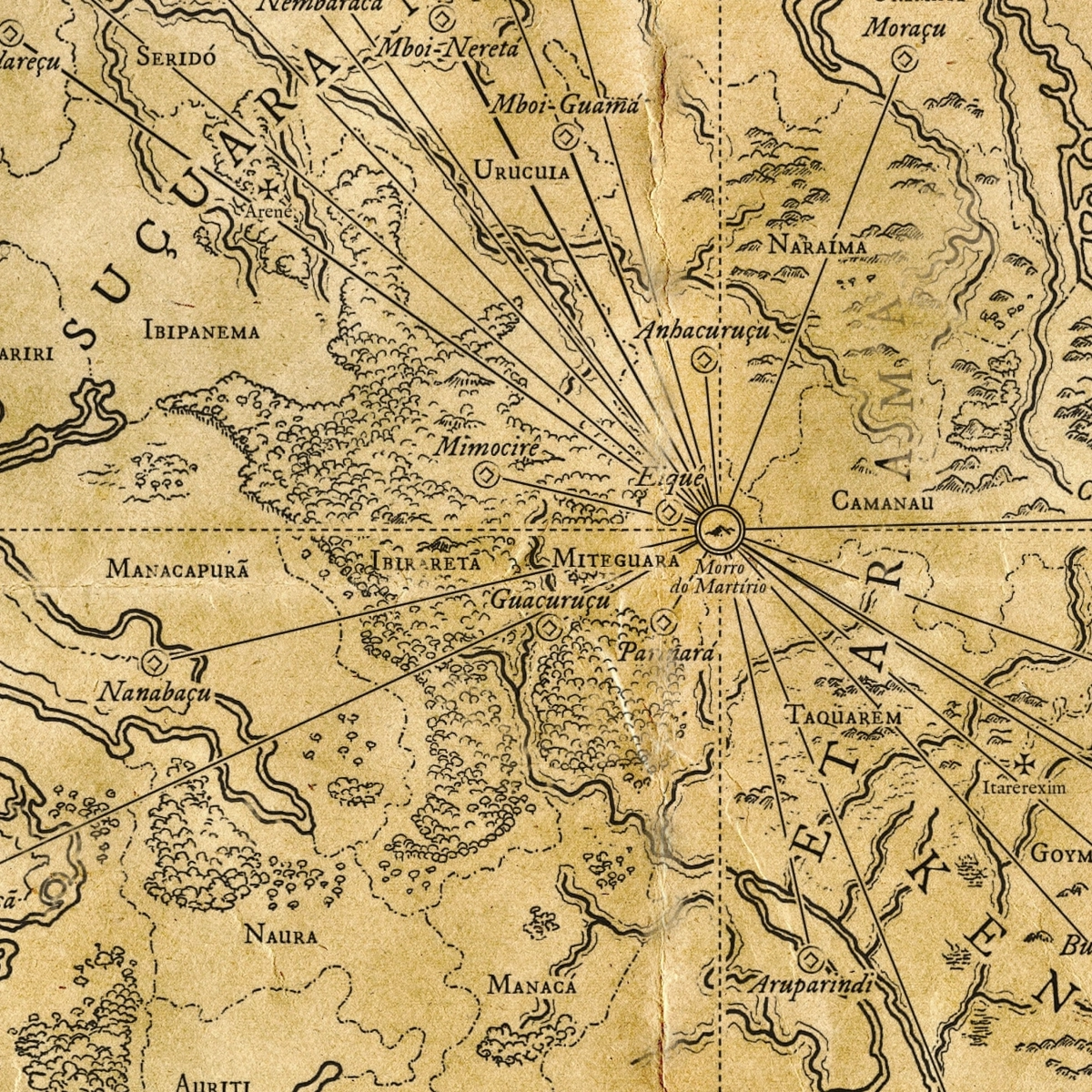
This personal project explores the world of Tiriana, an original fantasy setting developed over many years through worldbuilding and fiction. The map depicts the path of the Great Incarnates—colossal spiritual entities that crossed the World Gate at the Hill of Martyrdom and walked in straight lines across Tiriana a thousand years ago, forever reshaping both the landscape and the mythology of the world.

Today, these immense beings are known as the Dormant Ones. Revered, feared, and studied by different cultures, they remain motionless across the continent, awaiting the prophesied end of the world.

Client
Personal project
Date
October 2018
Dimensions
21 × 21 cm
Type
Regional map

The piece was conceived as an in-world artifact, simulating historical printing and reproduction techniques as if it had been produced within Tiriana itself. Rather than striving for modern cartographic precision, the project explores how mythology, memory, and material culture influence the way fictional societies represent their own world, blurring the boundaries between map, historical document, and sacred record.

Tiriana is an original fantasy setting inspired by Brazilian landscapes, folklore, religious traditions, and Indigenous cosmologies. Conceived as a mythical world that existed before our own, the setting explores themes of memory, catastrophe, migration, and enchantment through a distinctly Brazilian lens. At its heart lies a world in decline: ancient civilizations have risen and fallen through the power of itavera—a luminous mineral tied to forgotten magical knowledge—while rising seas and long-foretold disasters threaten what remains of the continent. Rather than reproducing familiar European fantasy tropes, Tiriana seeks to evoke a mythic Brazil, at once familiar and wondrous, standing perpetually on the threshold between history and enchantment.

Tiriana: The Lowlands of Chã Crassa

Tiriana: The Lowlands of Chã Crassa

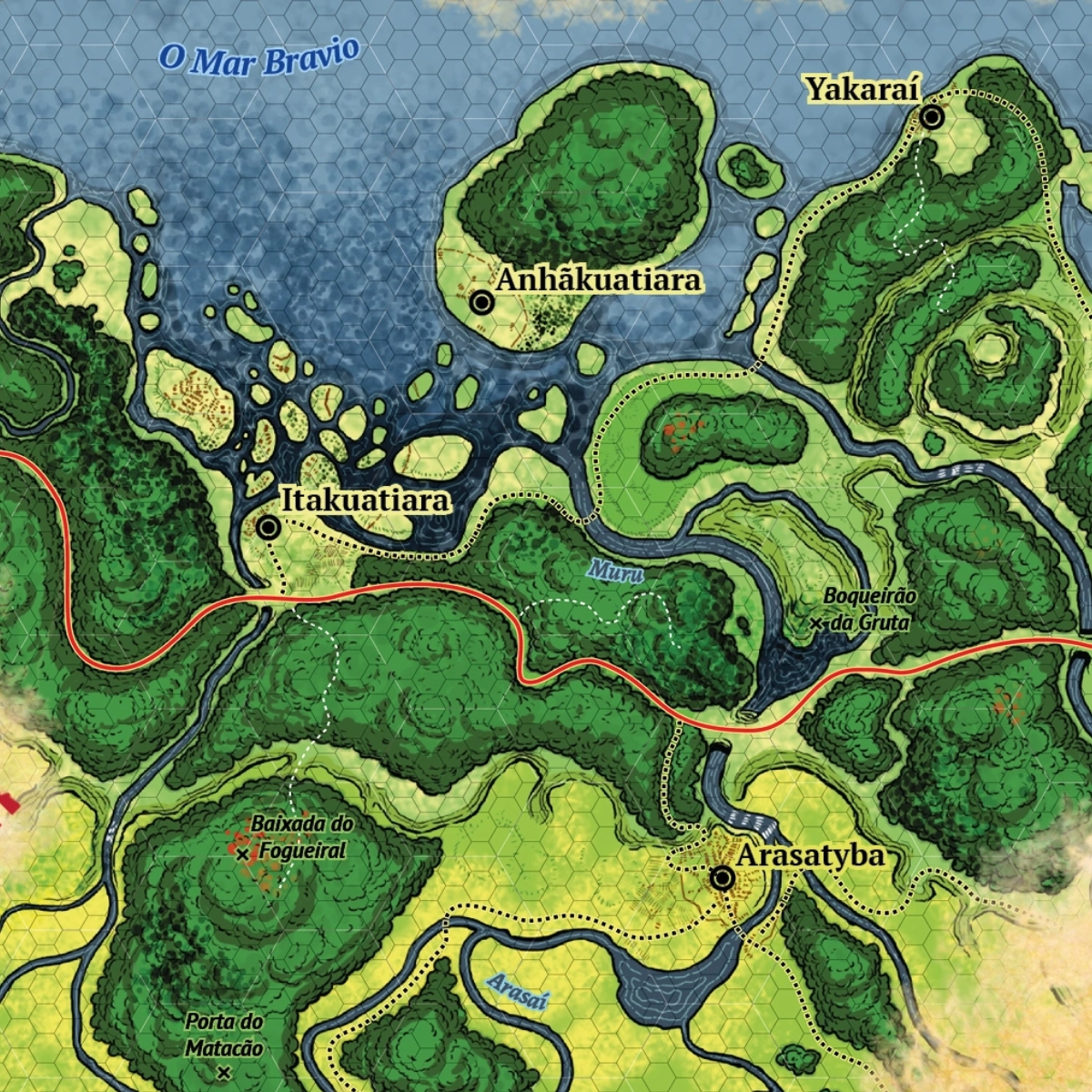
This personal project presents a regional-scale map of the Chã Crassa Lowlands, a coastal region located along the eastern shores of Tiriana. Conceived as part of the ongoing development of the setting, the map explores the geography and spatial relationships of a landscape shaped by its proximity to the sea and by the cultures that inhabit it.

Like other maps created for Tiriana, the piece was designed not only as a geographic reference, but also as a worldbuilding tool. Particular attention was given to the interplay between terrain, settlement patterns, and regional identity, helping to establish the Chã Crassa as a distinctive and believable part of the larger world.

Client
Personal project
Date
December 2018
Dimensions
29,7 × 21 cm
Type
Regional map

Tiriana is an original fantasy setting inspired by Brazilian landscapes, folklore, religious traditions, and Indigenous cosmologies. Conceived as a mythical world that existed before our own, the setting explores themes of memory, catastrophe, migration, and enchantment through a distinctly Brazilian lens. At its heart lies a world in decline: ancient civilizations have risen and fallen through the power of itavera—a luminous mineral tied to forgotten magical knowledge—while rising seas and long-foretold disasters threaten what remains of the continent. Rather than reproducing familiar European fantasy tropes, Tiriana seeks to evoke a mythic Brazil, at once familiar and wondrous, standing perpetually on the threshold between history and enchantment.