The Namurana Letters
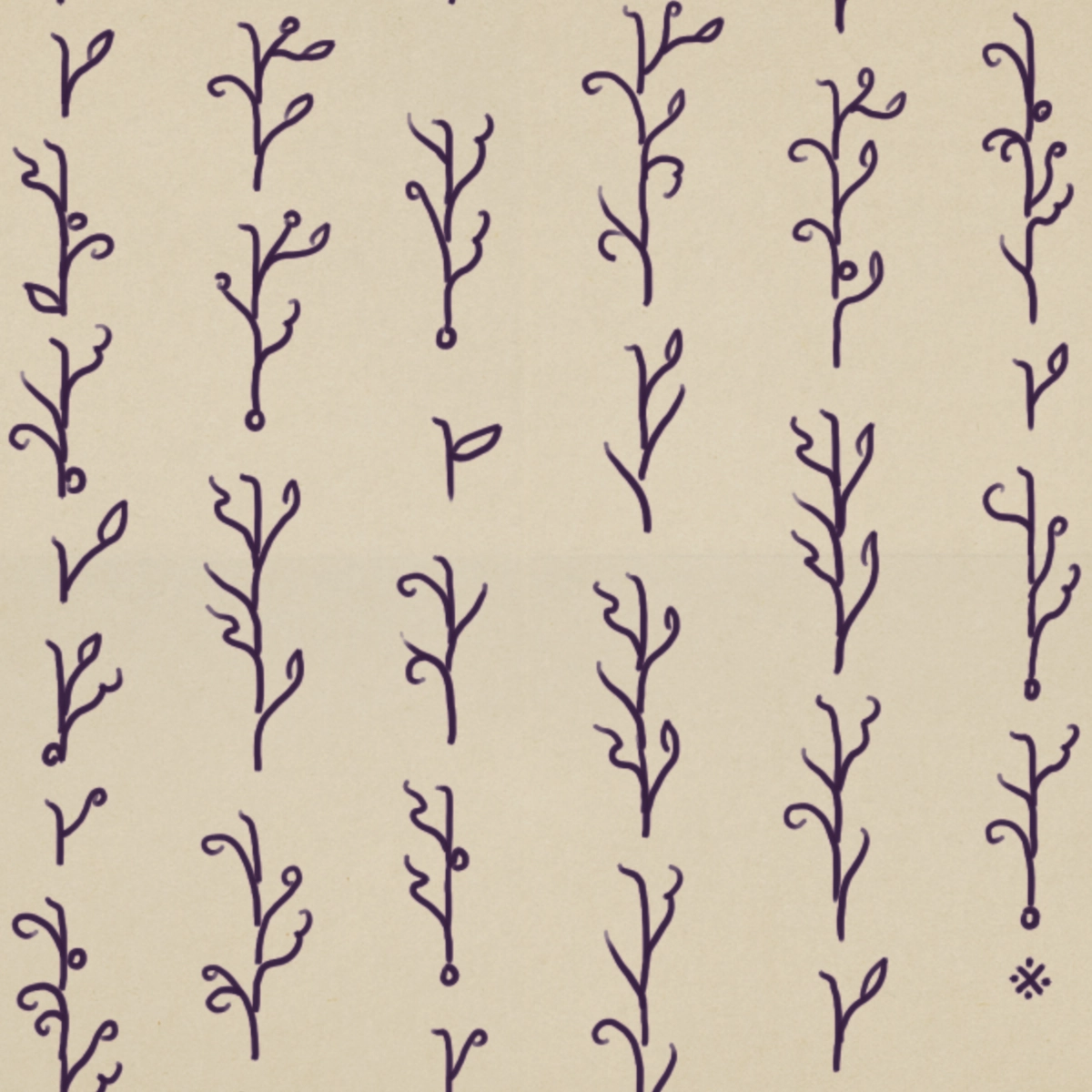
The Namurana Letters are a simple cipher system in which each symbol represents either a consonant or digraph, or a vowel. Words are arranged vertically in a linear fashion, forming elegant columns of text. I originally developed the script for use in illustrations and graphic elements associated with Tiriana, my original fantasy roleplaying setting.
Because Tiriana draws much of its inspiration from Indigenous Brazilian cultures—which traditionally emphasize rich graphic traditions rather than written language—the script was conceived to evoke the verticality of trees while remaining highly ornamental. Within the world’s fiction, traditional texts are inscribed on buriti palm leaves, requiring a writing system that is both delicate and visually refined.
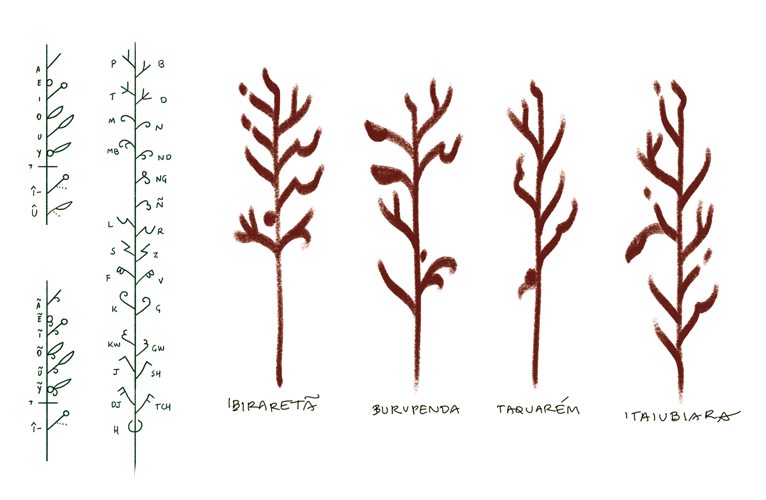
The namurana letters are among the most widespread writing systems in Tiriana and exists in numerous regional variants. In some areas, texts are written from bottom to top; in others, the glyphs adopt a more angular appearance. Certain traditions separate the central stem with each word, while others do so only between sentences, reflecting the cultural diversity of the setting.
The examples presented below are adaptations of stories collected in Poranduba Amazonense, recorded by Brazilian naturalist João Barbosa Rodrigues in 1890. Both tales were later adapted by composer Heitor Villa-Lobos in his Two Amerindian Legends in Nheengatu: I. Yurupari and the Boy and II. Yurupari and the Hunter.
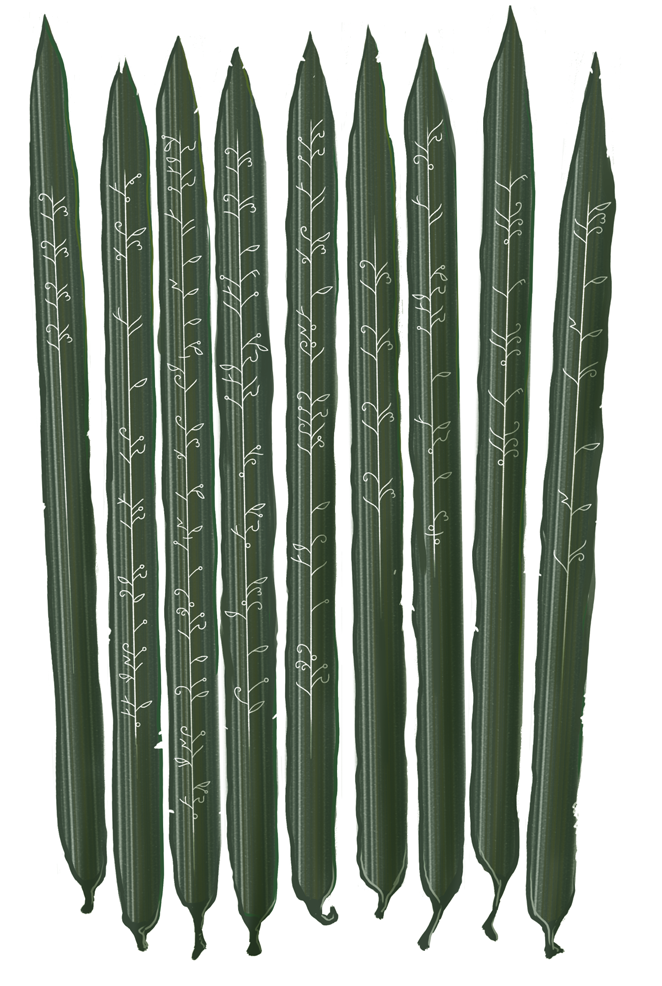
[Manha! Manha! Manha! Manha!]
[Mom! Mom! Mom! Mom!]
Yepé kunhã, paá, u kire taíra irumo i kisaûa pupé.
A woman, it is said, was sleeping with her son in her hammock.
Yurupari, paá, u su u îu’uca kunhã iuá su’i i membira u imu kisaûa uirpe.
Yurupari took the boy from her arms and laid him on the ground.
— Manha! Manha! U xipiá Yurupari yané uirpe unhenu u ikó…!
— Mom! Mom! Look, Yurupari is lying beneath us…!
Ariri, paá, kunhã u peseka muirakanga u nupa i membira.
Then the woman picked up a stick and struck her son.
[Manha! Manha! Manha! Manha!]
[Mom! Mom! Mom! Mom!]
Arame, paá, Yurupari u pure u nhe’e:
Then Yurupari leapt up, saying:
— Xa ganane! Xa ganane! Xa ganane!
— I tricked you! I tricked you! I tricked you!
Unhana, u su ana. U su ana.
He ran away. He went away.
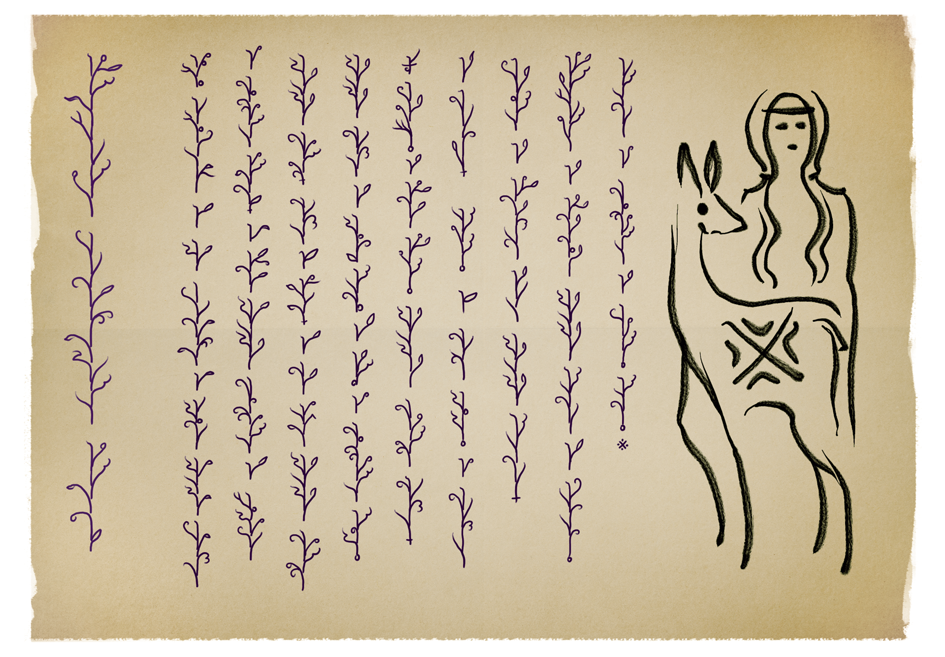
Yepé apegaua u su kamundu u asema suasu kunhã i membira irumo. U îumu suasu membira, u pesika suasu mirĩ. Manha o îauau. U mu iaxu suasu mirĩ, suasu manha u seno rame u ure i membira rese. A’e kuite u îumu îuire suasu mirĩ manha. U manu. Ariré o maã sese i manha kuéra u iumunhã uaá suasu rama. Yurupari u îumumeu suasu rama u ganane arama i membira u kire rame.
A hunter once went into the forest and encountered a doe with her fawn. He shot the fawn and carried it away. The mother fled. When the young deer cried, its mother returned. The hunter then shot the doe as well. She died. As he approached, the man realized that he had killed his own mother. Yurupari had transformed the hunter’s mother into a doe in order to deceive her son while he slept.
The Namurana Letters themselves were originally inspired by Laoris, a writing system created by Anton Brejestovski for the constructed language of the same name. The language was developed for the musical group Caprice and appears in songs from the album Elvenmusic 3 — Tales of the Uninvited.