Lost Flavors: The Mastygian Script
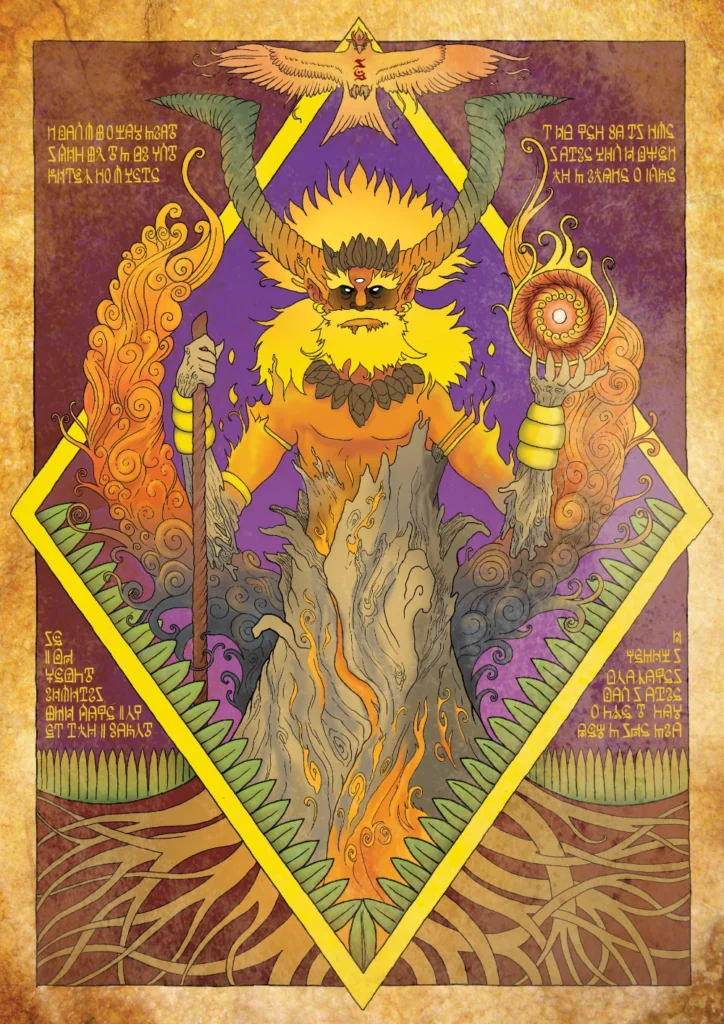
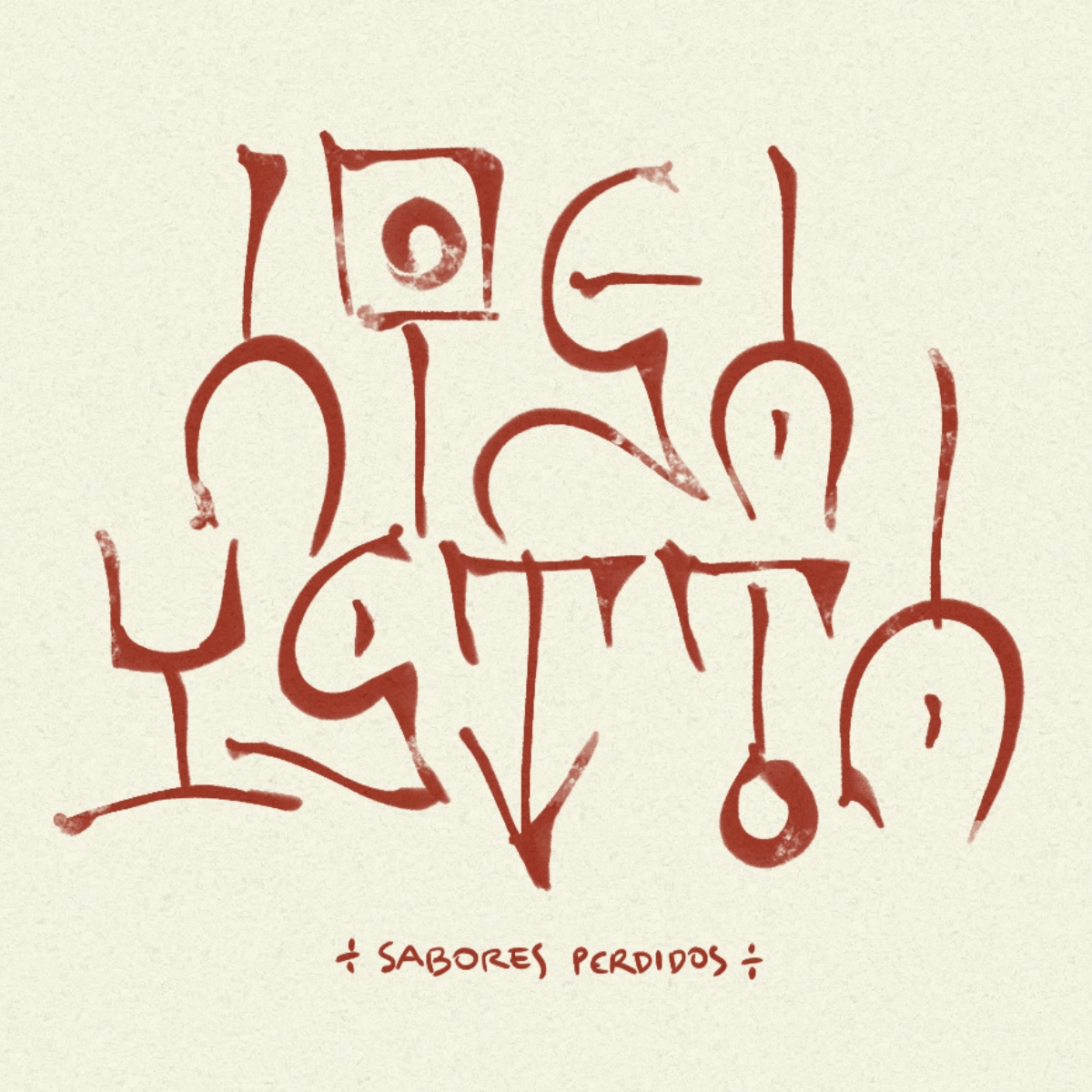
While illustrating the deities of Lost Flavors, a Brazilian tabletop roleplaying game, I began developing a dedicated writing system to accompany the artwork and reinforce the setting’s visual identity. The script was primarily inspired by Ge’ez, the writing system traditionally used for the Amharic language, while also drawing heavily from the themes and symbolism of the game itself.
In keeping with the culinary focus of Lost Flavors, the symbols were originally conceived as highly simplified representations of cooking utensils, ingredients, and spices. Their stylization reflects the natural evolution of writing systems over time, gradually transforming recognizable objects into abstract signs.

Beyond this culinary foundation, the script is organized around three central concepts that permeate the setting: Fire, Fermentation, and Water.
Fire — the pa series. Derived from plosive and obstruent consonants, these symbols are based on cutlery, tools, and implements associated with preparation and transformation.
Fermentation — the ma series. Corresponding to sonorant consonants, these characters take their forms from ovens, crates, and other structures linked to preservation and slow transformation.
Water — the sa series. Representing liquids, fricatives, and flowing sounds, these signs are inspired by cups, vessels, and containers used for beverages.

The Mastygian script is an abugida, meaning that each character inherently represents a consonant accompanied by a default vowel sound—typically a. Additional marks are then applied to modify the vowel or suppress it altogether.

Thus, writing pa requires only a single symbol, while pe is formed by adding a vowel marker that changes the inherent a sound to e. Likewise, a smaller diacritic can silence the vowel entirely, leaving only the consonantal sound p.